

North East & North Cumbria ICB Regional Impact Case Study
How the rollout of Mobilise's digital carers service has not only reached over 166,000 “hidden” carers at scale - it has also built a lasting infrastructure for carer identification, information, advice, and guidance that will outlive the funding period.
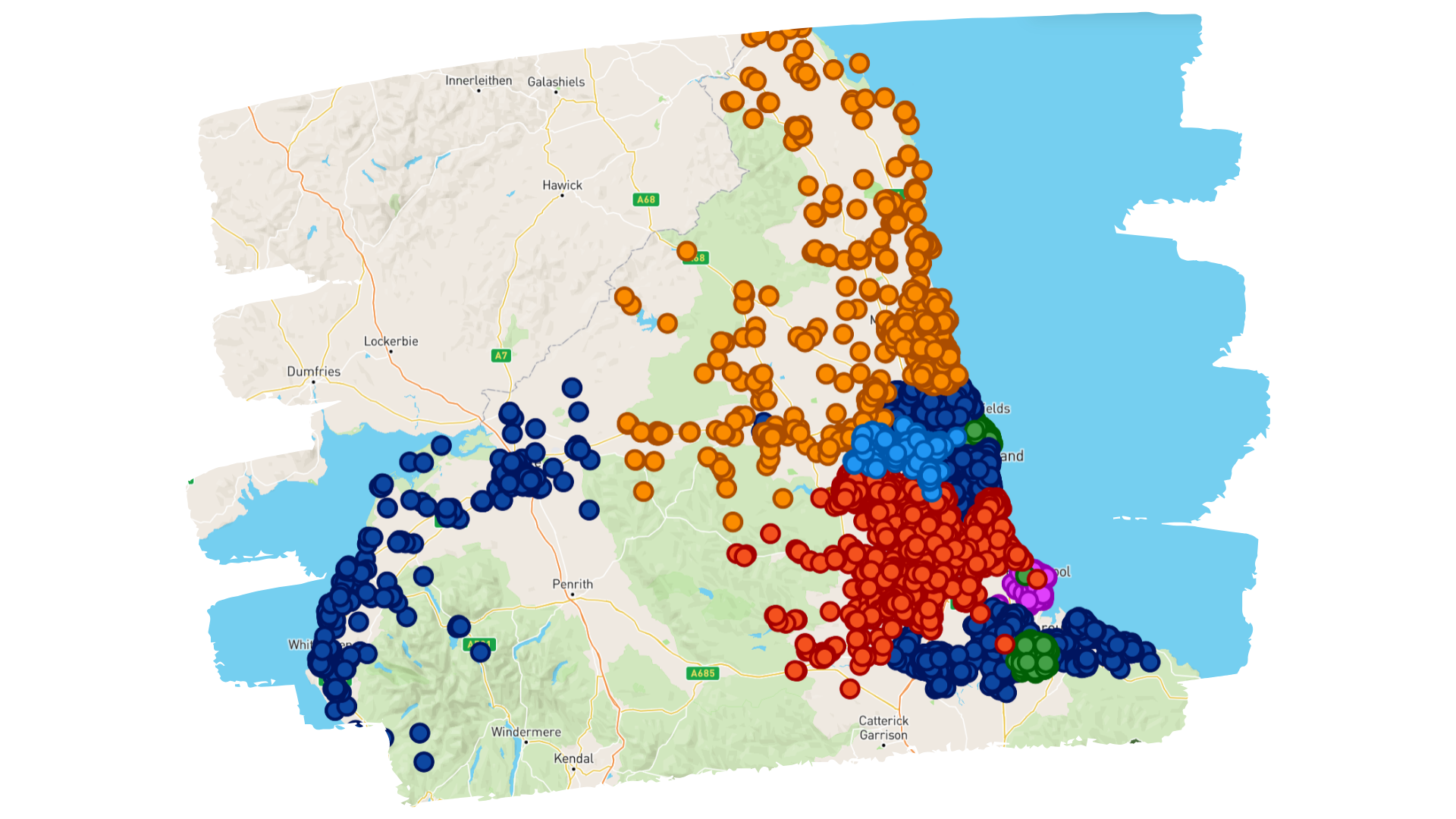
Commissioned through the Accelerating Reform Fund (ARF) and delivered in partnership with 13 Local Authorities













166.9k
People caring reached
29,599
Carers identified, registered & supported
77,047
Carer engagements & support actions
82%
Have never accessed support before
Executive summary
Over the past two years, the Mobilise digital platform has fundamentally changed how unpaid carers across the North East and North Cumbria access support. Commissioned through the Accelerating Reform Fund (ARF) and delivered in partnership with 13 Local Authorities, the rollout of a digital carers service has not only reached over 166,000 “hidden” carers at scale - it has built a lasting infrastructure for carer identification, information, advice, and guidance that will outlive the funding period.
Now Mobilise has identified, registered and supported nearly 30,000 carers across the North East and North Cumbria. This report presents the overarching regional picture, alongside Local Authority-level analysis and a forward-looking framework for embedding this approach within business-as-usual commissioning.
Context and strategic approach
The North East is home to a disproportionately high number of unpaid carers relative to the national average, driven by higher rates of long-term illness, disability, and deprivation across the region. Census 2021 data indicates that approximately 1 in 10 residents provides unpaid care, yet local authority carers' registers have historically captured only a fraction of this population.
Unpaid carers are a critical pillar of the adult social care system. Without their contribution (estimated nationally at over £162 billion annually) statutory services would be overwhelmed. Yet carers themselves are often “invisible” to the system: they do not self-identify, they have commitments inside working hours, and they face stigma or practical barriers that prevent engagement with traditional services.
Mobilise was designed to address precisely this gap: a digital-first, preventative approach to carer identification and support. Coming together as a regional collective, Utilising specialist digital marketing techniques, AI-powered tools, expert guides in language carers understand and a national community of thousands that fosters an authentic and organic space for carers to support each other. A service that supports carers in where they are at home, but also seamlessly complements existing face-to-face services rather than replacing them.
Regional impact
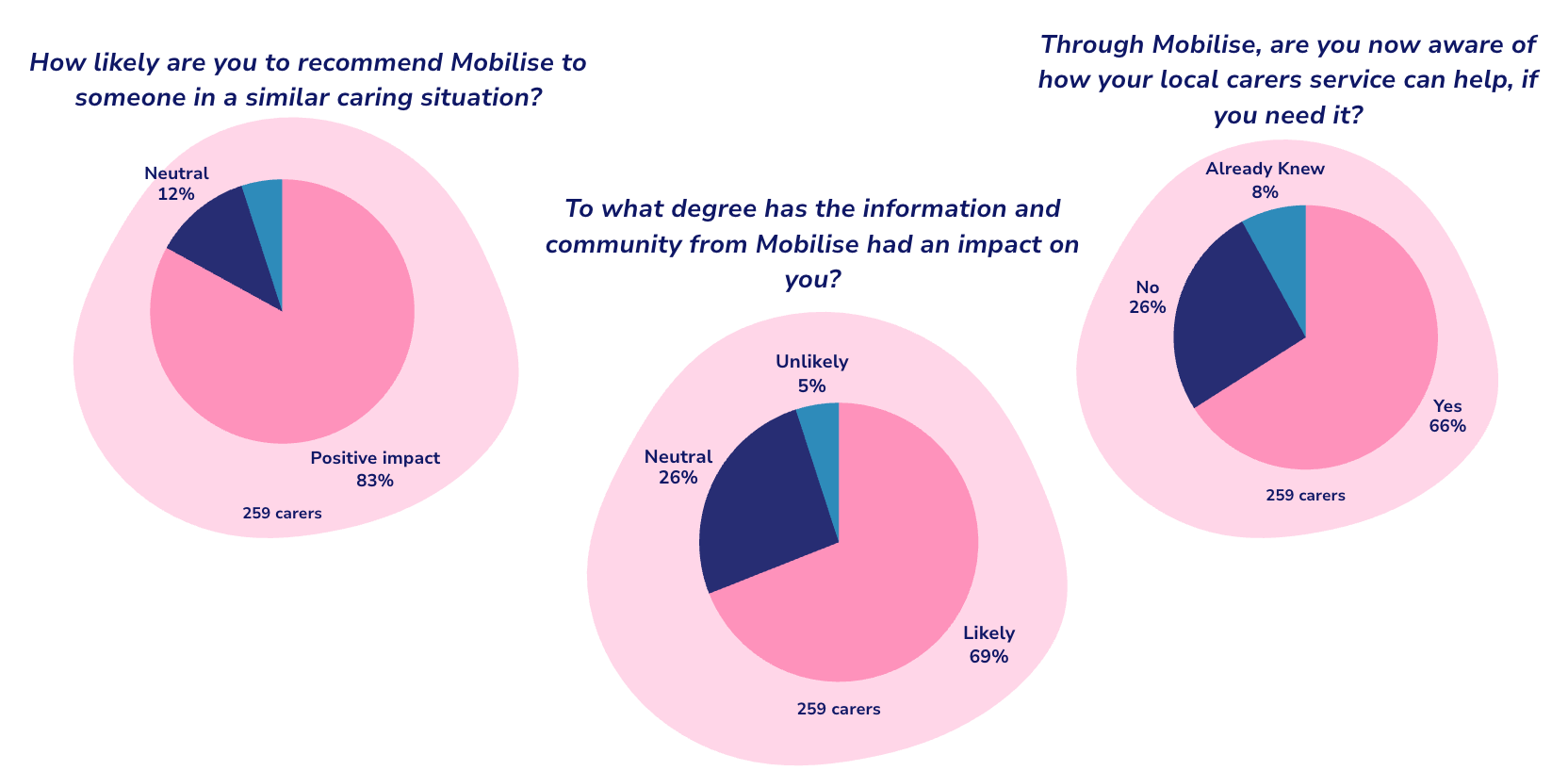
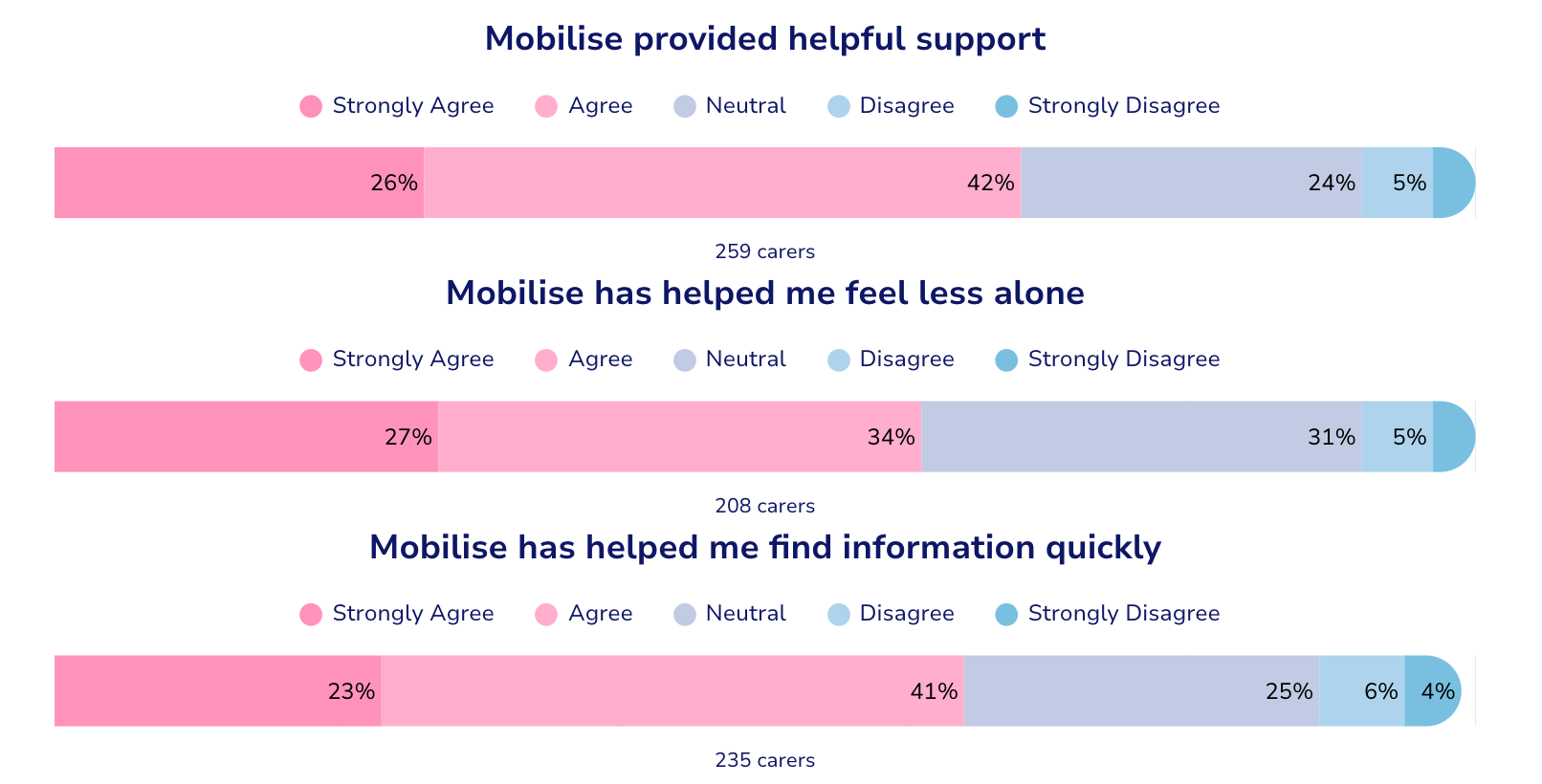
The evergreen impact survey, completed by 259 carers across the region at the 60-day mark, provides a granular picture of the platform's effect on individual wellbeing and resilience.
Perhaps the most significant finding is the scale of previously unmet need it has uncovered. Eight in ten carers who engaged with Mobilise had never previously accessed any form of carer support, a figure that points to a substantial hidden carer population across the region.
Collaboration with Local Organisations
Rather than operating as a standalone digital service, the platform functions as a gateway - identifying and engaging carers before routing them to the appropriate local commissioned service.
The partner portal was co-produced directly with North East carer organisations, ensuring the referral pathway reflects local context and commissioner priorities. Partner organisations currently active across the region include:
- Sunderland Carers Centre
- Caregivers Connected Gateshead (Carers Federation Limited)
- Carers Northumberland
- North Tyneside Carers' Centre
- Newcastle Carers
- South Tyneside Connected Caring
- Hartlepool Carers
- Stockton-on-Tees Adult Carers Support Service
- Carers Together
- The Junction
- Teesside Mind
- People First
- We Care You Care
- Durham County Carers Support
431
Onward referrals to local commissioned services
66%
Of carers now aware of local service offer
Referrals operate via a mix of self-referral and direct data transfer, dependent on the preferences and GDPR arrangements of each partner organisation. The ambition is to migrate all partners to the advanced portal, enabling richer conversation, real-time collaboration, and a clear flow of carers across the regional system.
Local Authority analysis
The table below presents the programme footprint across the 13 North East and North Cumbria Local Authorities that form the focus of this report. Where specific LA-level registration data is noted as indicative, this reflects the regional proportional distribution applied to the confirmed total of 29,599.
.png "North East ADASS - August 2025 (1)")
Key demographic observations across the region
Analysis of engagement data across the region reveals several notable demographic patterns that should inform future commissioning decisions:
Hours of Access
Across the North East and North Cumbria, 67% of carers engaged with Mobilise outside of standard 9–5 working hours - a possible indicator of how many are balancing caring alongside employment. In person carer support services can, traditionally, be inaccessible to working carers, delivered predominantly during hours when they are unavailable.
Mobilise removes that barrier, providing information, advice, and peer support at the times carers actually need it, evidence of unmet need being addressed at scale.
Gender
The majority of registered carers across the region identify as female, consistent with national data on the gendered distribution of unpaid caring.
However, the platform has demonstrated particular success in reaching male carers, a group traditionally underrepresented - through Mobilise’s straight forward guides and male only peer support offer.
Geography: Rural vs Urban
Rural and semi-rural Local Authorities- County Durham, Northumberland, and North Cumbria, show some of the highest rates of out-of-hours access (70–72%) and the highest proportions of carers who had never previously accessed support.
This is consistent with known barriers of travel distance, limited local provision, and social isolation in rural settings. Mobilise is particularly impactful in these areas, functioning as a first point of contact for carers who would otherwise remain entirely unsupported.
Deprivation
Sunderland and parts of Gateshead and South Tyneside sit in the top decile of the Index of Multiple Deprivation nationally. Carers in these areas face compounded pressures: financial instability, poor health, and limited access to informal support networks. The Financial Toolkit and Carers Allowance Checker has been particularly valued in these areas, with carers using the platform to understand benefits entitlements and access financial guidance.
Regionally, Mobilise has enabled unpaid carers to assess their eligibility to over £8 million in carers allowance support.
Caring relationship
The most common caring relationships across the region are spouse/partner and parent, reflecting an older cared-for population with conditions including dementia, physical disability, and long-term illness. However, there is a growing number of parent carers of children both over and under 18 years of age, showing a demand for self-service information at a time that suits their lifestyle.
Legacy, future-proofing and the case for sustained investment
Evidence from across the North East and North Cumbria shows that digital preventative support offers a highly cost-effective approach to identifying and supporting unpaid carers earlier. Digital interventions deliver an average return on investment of £3.17 for every £1 invested, by preventing, reducing and delaying the need for more intensive support.
By engaging carers before they reach crisis point and providing timely information, peer support and seamless referral pathways into local services, digital approaches enable authorities to maximise reach while improving outcomes and making better use of limited resources
"Mobilise worked collaboratively with our existing carers support service provider, ensuring their services complemented existing support and enhanced our carers offer rather than replace it in any way. Mobilise is actively referring people who may require additional support into the face-to-face carers support service."
— Jacqui Kaid, Strategic Carers Liaison Officer, South Tyneside Council
Want to uncover hidden demand and improve statutory outcomes? Speak to the Mobilise team to discover how our integrated approach can transform your local carer support.